
Our History
The heritage of Antica Sartoria di Maremma
Tailors in Tuscany since early 1900s
At the beginning of the 20th century, the Maremma was a land still linked to millenary traditions: there were the butteri, strong and vigorous men, who spent all their time outdoors, on horseback, to control the herds, shaped by the sun and the elements, and there were the housewives, women of other times who ran the house.
It is said that it was in this genuine environment that, in the dim light of his small house in the hills of Scansano, in the province of Grosseto, a tailor had the idea of interpreting Maremma clothing, to make it suitable for the needs of his times. Using his few savings, he began to use natural fibers such as velvet and moleskin, strong and resistant materials that had to be suitable for any weather condition and any effort; models designed for the daily needs of those who would wear them, always remaining faithful to the simplicity of the origins. Unfortunately, the first great war and the difficult situations that arose for everyone forced the tailor to abandon his art and his work.
1960 - 1970
The first Maremma jackets workshop
That tailor was the grandfather of the brothers Brema, Lorella and Amos Scheggi from Scansano. One day a long time ago, around the 1960s, her husband from Brema, Marcello Tozzi, also a tailor from the small town of Pancole, near Scansano, found an ancient, tightly closed chest in the attics of the Scheggi house. Inside he found his grandfather's ancient tailor's tools, yellowed drawings and various fabrics, carefully arranged. His passion, together with the brothers Brema, Lorella and Amos, led him over time to recreate, in the then small country house, a first tailoring workshop dedicated to reproducing the jackets and clothing of Maremma.
Thus was born the Antica Sartoria di Maremma, whose company name in 1970 took its name from Marcello's wife, Brema Srl in Pancole in Tuscany, in the province of Grosseto.
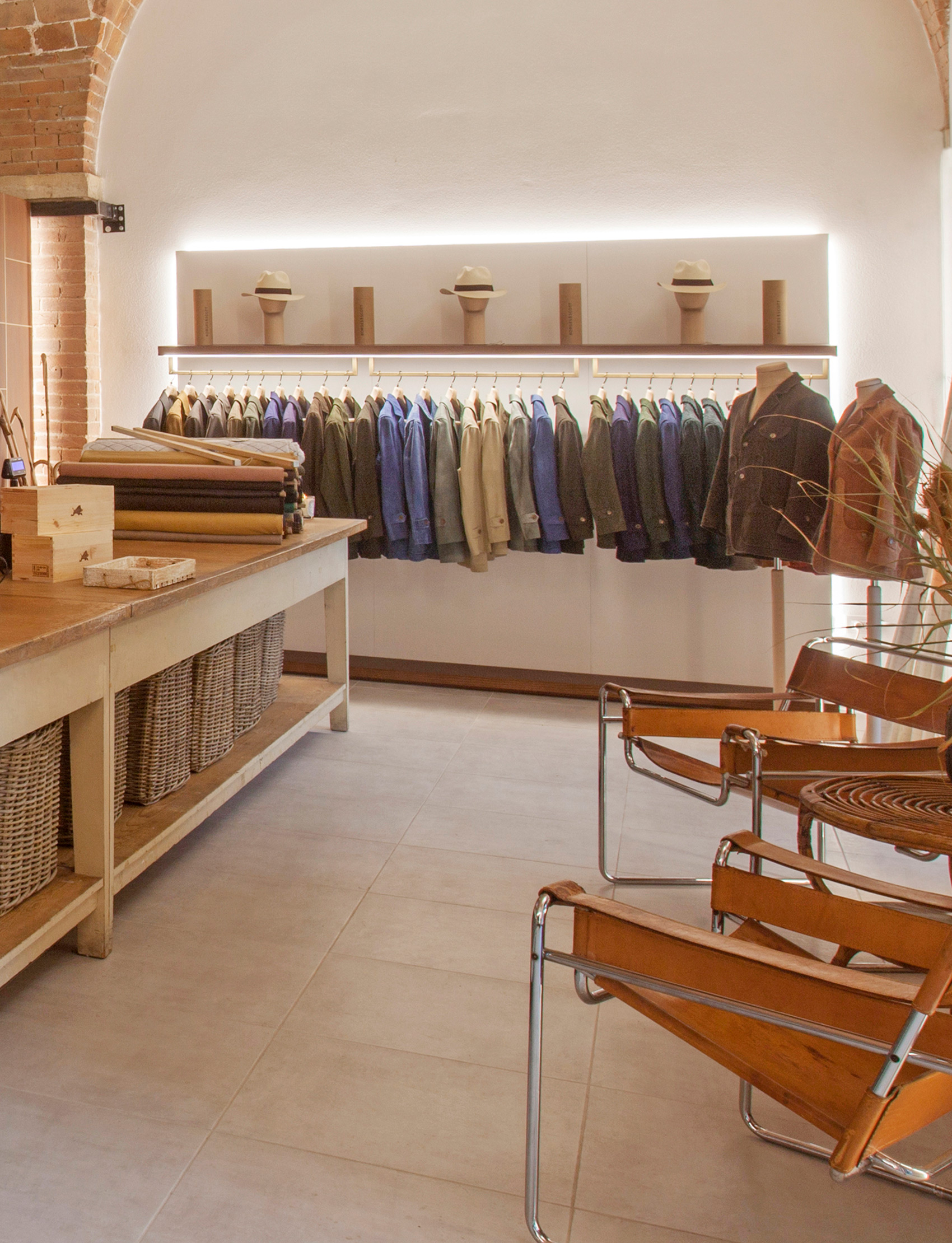
The flavor of the countryside
Dress in the Maremma style
The hunting and work jackets with game bags, the greatcoats with cape and the comfortable trousers in robust, tear-proof fabrics, cut in wide shapes were necessary garments in the Maremma of the past, almost a uniform for the butteri, the hunters, the farm men who travelled the woods and the farm roads on horseback, who worked outdoors in all weathers, in contact with the livestock and agricultural machinery, and who made hunting a reason for survival.